
Gen Z Are Running Circles Around Your Growth Team With AI Agents
@mackrmrz gives a breakdown on his one person business powered by AI agents

Mack Ramirez (@mackrmrz on X) is one of the best examples right now of someone leveraging AI agents to operate at team scale solo.
Straight out of college he worked as a creative director under an investor, running campaigns for finance startups and working with artists like Mr. Doodle and PichiAvo. Today he runs what looks like a full creative agency alone, and breaks down how his system works.
What were you doing before crypto? What's the origin story that led to you running up projects solo?
Before crypto, I was working directly under an investor as a creative director for a couple years. He'd point the direction and I would lead creative on it. That led me to working with artists like Mr. Doodle, PichiAvo, etc. as well as working with various startups in the finance industry. It was a great opportunity and environment to be exposed to right out of college. That's where a lot of my versatility comes from.
You're a one person team running projects that look like they have 10 people behind them. Walk me through how that actually works day to day.
It starts with organization. Everything has a place. Specific drives for specific projects, templates for any process I'm going to repeat more than twice.
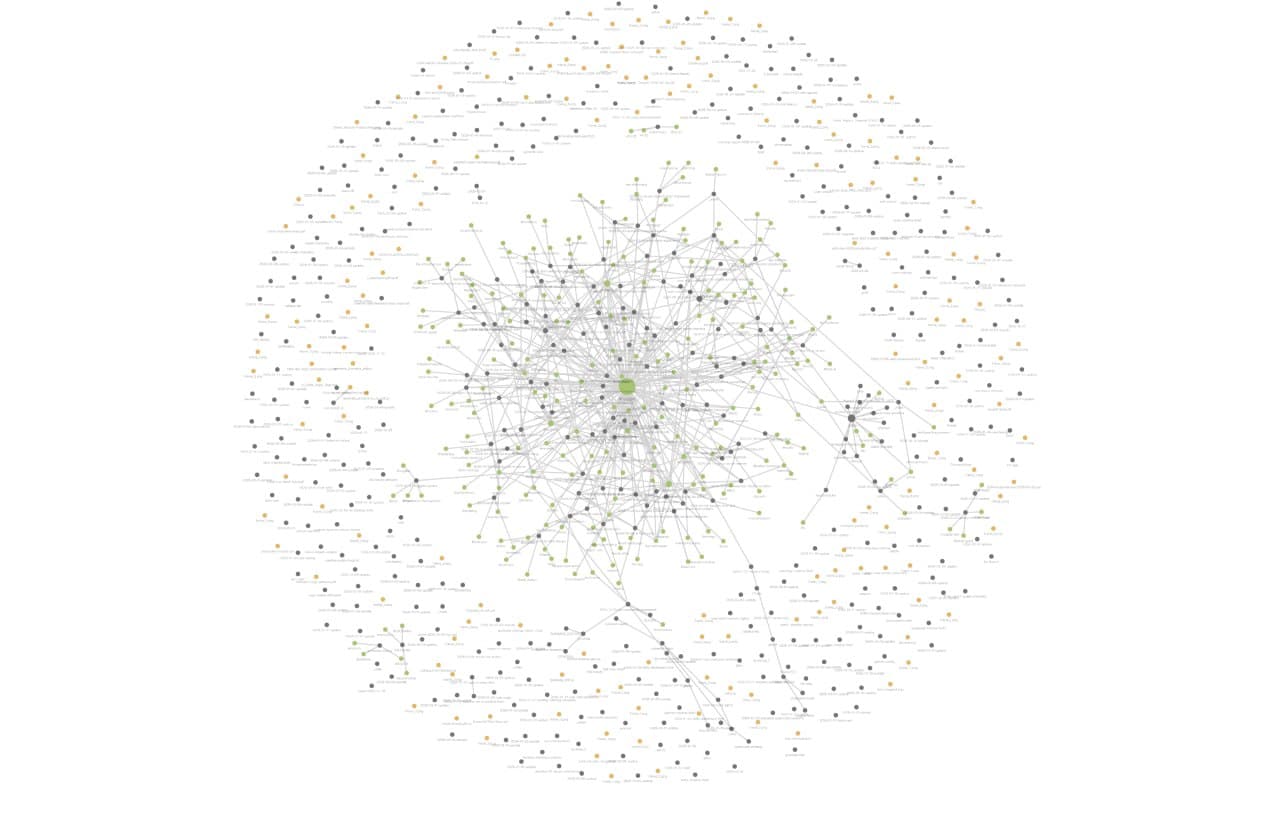
The day-to-day is: Wake up, open my operating system — it's an Obsidian vault that knows everything about my business. Clients, priorities, what I shipped yesterday. That's my briefing. From there I'm directing agents the same way a creative director would direct a team. One's doing research, one's sourcing footage, one's drafting outreach. I'm not doing the manual work — I'm pointing the direction and reviewing the output. I have 3-5 Claude Code terminal tabs open on my computer at any given time all working on isolated work.
The bottleneck is just your decision-making speed.
When you have a 10 person team, they want to have meetings about the meeting. They're waiting on approvals. But when it's just you and you're organized, you cut all of that out. The bottleneck is just your decision-making speed.
You use AI agents for almost everything. When did you first realize you could replace entire teams with agents? What was the moment it clicked?
This whole using agents thing is very new — probably been two or three months like this. It's been an iterative process. Before agents, it was: open up Claude Code, run through a process I have written down somewhere, prompt XYZ to get XYZ results.
When I learned about the Claude Code Agent SDK, that's when I started developing my own agents for my own processes. It's a work in progress, to this day I'm still creating and developing new agents for different workflows.
If you're building right now and not using the Agent SDK, you're shooting yourself in the foot.
The moment it clicked was when I started implementing the Agent SDK. If you're building right now and not using the Agent SDK, you're shooting yourself in the foot. Anyone who wants to future-proof themselves should be building with that.
What's your actual AI agent stack right now? The specific agents, tools, and workflows you're running every day.
Core tools: Claude Code + Obsidian. Obsidian is my brain of operations. It knows everything about my business — clients, meetings, calendar events, important emails. Those two are the base of everything.
Image/Video: Nano Banana Pro for images, Kling 3 for video. I've been trying to keep the tools simple — honestly you can do everything you need to with Higgsfield alone if you know how to edit.
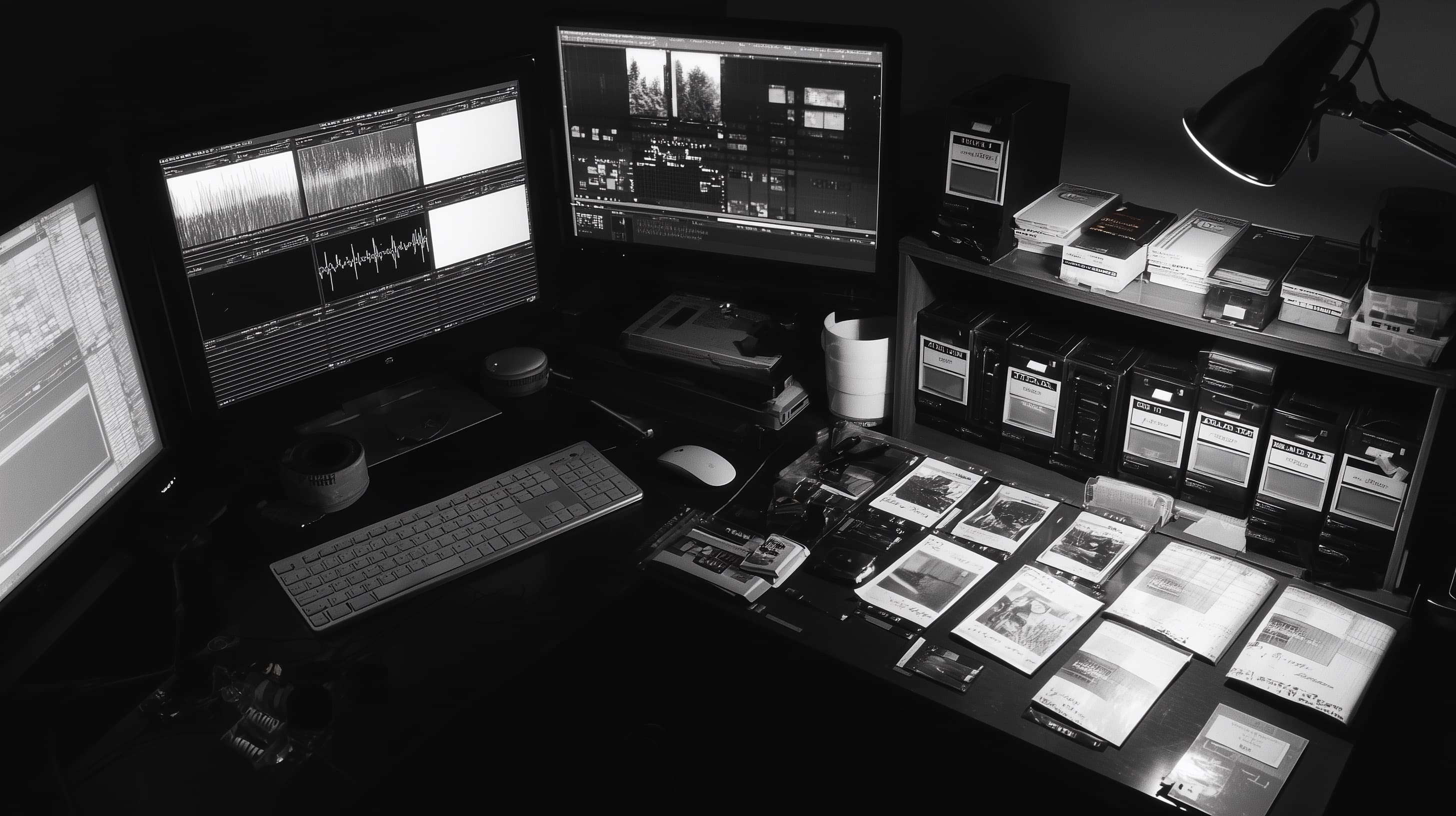
Editing: DaVinci Resolve. I've used it for years coming from traditional media — color grading footage shot with real cameras. Moving into creating with AI, I stuck with it. It's what I'm used to and I work faster in there than anything else.
Agents & Workflows: Lead sourcing agent, outreach agent (with access to nine different email domains), article writer agent for long-form content, and skills for Nano Banana, Kling 3, and using both in tandem.
When I'm making a video, I'm creating the image prompt with a corresponding video prompt, both tied to the specific skills of the models I'm using — so the prompts are optimized for each tool.
What separates a crypto project that takes off from one that dies in 48 hours? Is there a pattern?
In crypto, for the most part, it's all vaporware. There's no real product, no utility you're going to get out of it. What you're really selling is belief. You're building up a narrative that will make people believe — that's what you're doing. That's the common thread between all successful projects.
If your project has an “us versus them” aspect to it, that's what sets a good project apart from one that gets lost in the void of thousands launching every single day.
Narrative — number one, always.
Content behind the narrative — high-quality content out the gate. A great pinned video, a bunch of graphics lined up. That contributes massively to whether a project makes it.
More recently, we've seen a technical aspect begin to matter in memecoins — which was usually not the case. But if you can build a narrative around new AI tech combined with well-executed content, your odds of surviving increase exponentially.
How much of your content pipeline is automated versus manual?
A lot of the prep is automated. I built out a video brief generator — I tell it the topic, the narrative, the theme of the video, and from there it spawns sub-agents to:
- Research the topic to make sure we have relevant, up-to-date information.
- Source B-roll by scouring YouTube for clips to include — or you can point it in any direction you want.
From there, you just point it at the folder you want it downloaded to. That speeds up the process massively, especially when I'm using archival footage or random clips from YouTube. Even when it goes off in the complete wrong direction, it's still great for ideation and iteration.
What's still manual: The actual editing of the video. That still requires a human touch. We're not at a point yet where AI can replicate certain tastes or certain styles on the timeline. Eventually we'll get there — but not yet.
If someone wanted to learn how to use AI agents the way you do, where would they start? What's the first agent they should build?
The very first step is doing an audit. Find the bottlenecks. What are the things you do every single day? Find those repeatable processes. Once you find them, standardize things and build agents based on whatever you're doing daily.
The first agent you build is going to be different for everybody. I'd recommend building a personal operating system — at least that's what I've been calling it — to help keep track of tasks, deadlines, events, etc. After that, build agents based on what your operating system has learned about your work. Then connect these agents to APIs that make them more powerful like Firecrawl for web scraping.
The more knowledge and context it starts with, the better results you're going to get.
What skills matter most right now for someone trying to build in the crypto x AI intersection?
Coding is done. We solved coding. If you're teaching yourself syntax right now, you're wasting your time.
The most important skill is learning how to zoom out. Learning how to systemize. I know that's a buzzword, but it's true. If you're able to zoom out and break apart a business or a workflow — standardize it, identify where something can be replaced with an API, where you need human input to keep things on track, what repeatable formats you need to output — that's the most important skill.
It's meta. But the more meta you're able to get with these things, the more value you bring to the table when using AI.
What's the thing you're building or thinking about right now that nobody knows about yet?
On top of doing creative projects, I'm building software that enables e-com brands to scale assets internally. Instead of hunting thousands of users at $50/month, I'd rather go very deep and work one-on-one with brands — be more of an integrator than a subscription service. People are doing this right now, but it'll be much more common in 12 months I think.
You want to position yourself at intersections of your existing knowledge and think about how you can bring that to a specific industry — or be a generalist who knows a lot about a bunch of different things, then use AI to tie the common threads where they need to be tied.
Being an integrator is an entirely new industry that's spawning.
Being an integrator is an entirely new industry that's spawning. Integrating AI systems for existing businesses with existing cash flow is extremely lucrative — for them and for you. That's going to be an entire career field if it's not already.
That's what I'm doing right now. Focused on creative, while at the same time integrating AI systems and going deep with existing businesses.
@mackrmrz is a partner of The Vault, a curated marketplace for digital assets built by operators, not influencers. The tools he uses daily, the agents he builds, the workflows behind everything you just read — they're available to download and plug into your own stack.
View Mack's Products→